
Why HTTP Falls Short for Collaborative Apps
Building real-time collaborative applications—such as live multi-user code editors in CodeArena, interactive whiteboard canvasses, or instant messaging systems—requires moving beyond the traditional HTTP request-response cycle.
"The moment multiple users interact within a single shared context, the relational database can no longer be your synchronization mechanism. You need an ultra-low latency, bidirectional transport layer with state reconciliation built in."
Transport Overhead Comparison
While an HTTP GET poll transmits 800–1,500 bytes of headers (cookies, user-agents, caching headers), a WebSocket frame travels with just 2 to 6 bytes of framing overhead over an open TCP socket.
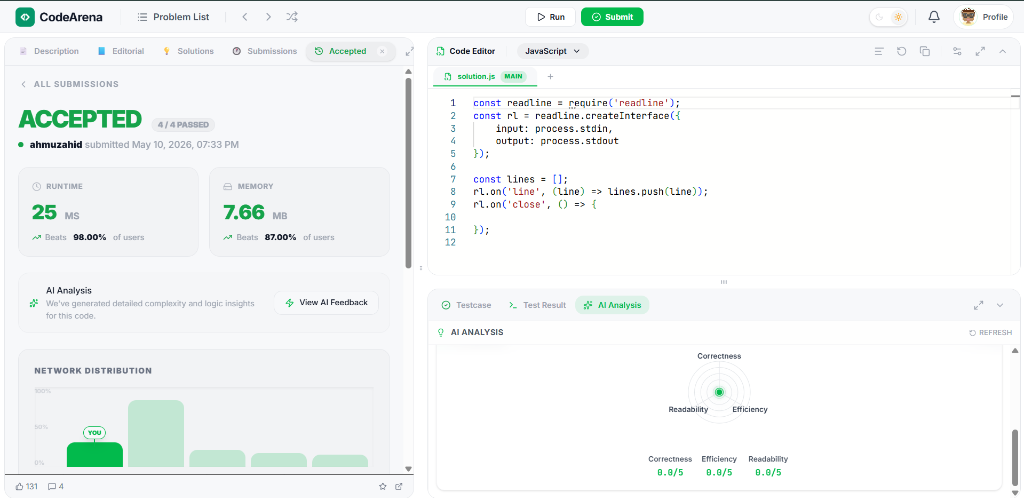
Real-time collaborative editing: live syntax evaluation, multi-user cursor updates, and instant testcase telemetry.
Real-World Concurrency Challenges I Faced
1. Memory Leaks from Zombie Listeners
In early React component iterations, navigating away from active problem rooms without detaching socket listeners caused duplicate event listeners to pile up, bloating client browser memory.
2. State Desync on Mobile Network Drops
When users on 4G/WiFi experienced transient network blips, the socket reconnected with empty local buffers, wiping out uncommitted code edits.
3. Multi-Node Cluster Isolation
When running multiple container instances behind a load balancer, User A on Node 1 could not receive broadcasts from User B connected to Node 2.
4. Concurrent Cursor Collisions
Two users typing at the same line offset simultaneously caused cursor jumping and character scrambling without conflict transformation.
How I Engineered the Solution
1. Redis Pub/Sub Cluster Adapter
Attached @socket.io/redis-adapter across all server containers. All room broadcasts are relayed through Redis Pub/Sub, synchronizing clients seamlessly regardless of which physical server holds their TCP socket.
2. Client-Side Offline Ring Buffer
When connection is lost, outbound keystroke deltas are queued in an in-memory ring buffer. On reconnect, the buffer flushes sequentially to the server with incremented version vectors, preventing any lost work.
3. Deterministic React Hook Lifecycles
Encapsulated socket events inside custom React hooks with explicit return cleanup functions (socket.off() and socket.emit("leave-room")), eliminating memory leaks completely.
Handling Network Drops & Heartbeat Reconnection
import { Server } from "socket.io";
import { createAdapter } from "@socket.io/redis-adapter";
import { createClient } from "redis";

const pubClient = createClient({ url: process.env.REDIS_URL });
const subClient = pubClient.duplicate();

export async function setupRealtimeServer(httpServer: any) {
  await Promise.all([pubClient.connect(), subClient.connect()]);

  const io = new Server(httpServer, {
    adapter: createAdapter(pubClient, subClient),
    cors: { origin: process.env.ALLOWED_ORIGINS?.split(",") || "*" },
    pingInterval: 25000,
    pingTimeout: 20000,
    maxHttpBufferSize: 1e6, // 1MB payload ceiling
  });

  io.on("connection", (socket) => {
    socket.on("join-editor-room", async ({ roomId, user }) => {
      socket.join(roomId);
      socket.to(roomId).emit("user-presence", { user, status: "ONLINE", socketId: socket.id });
    });

    socket.on("sync-delta", ({ roomId, delta, version }) => {
      // Broadcast operational transforms to other participants in room
      socket.to(roomId).emit("apply-delta", { delta, version, sender: socket.id });
    });

    socket.on("disconnecting", () => {
      for (const room of socket.rooms) {
        if (room !== socket.id) {
          socket.to(room).emit("user-presence", { status: "OFFLINE", socketId: socket.id });
        }
      }
    });
  });

  return io;
}
Optimistic UI and Client-Side State Reconciliation
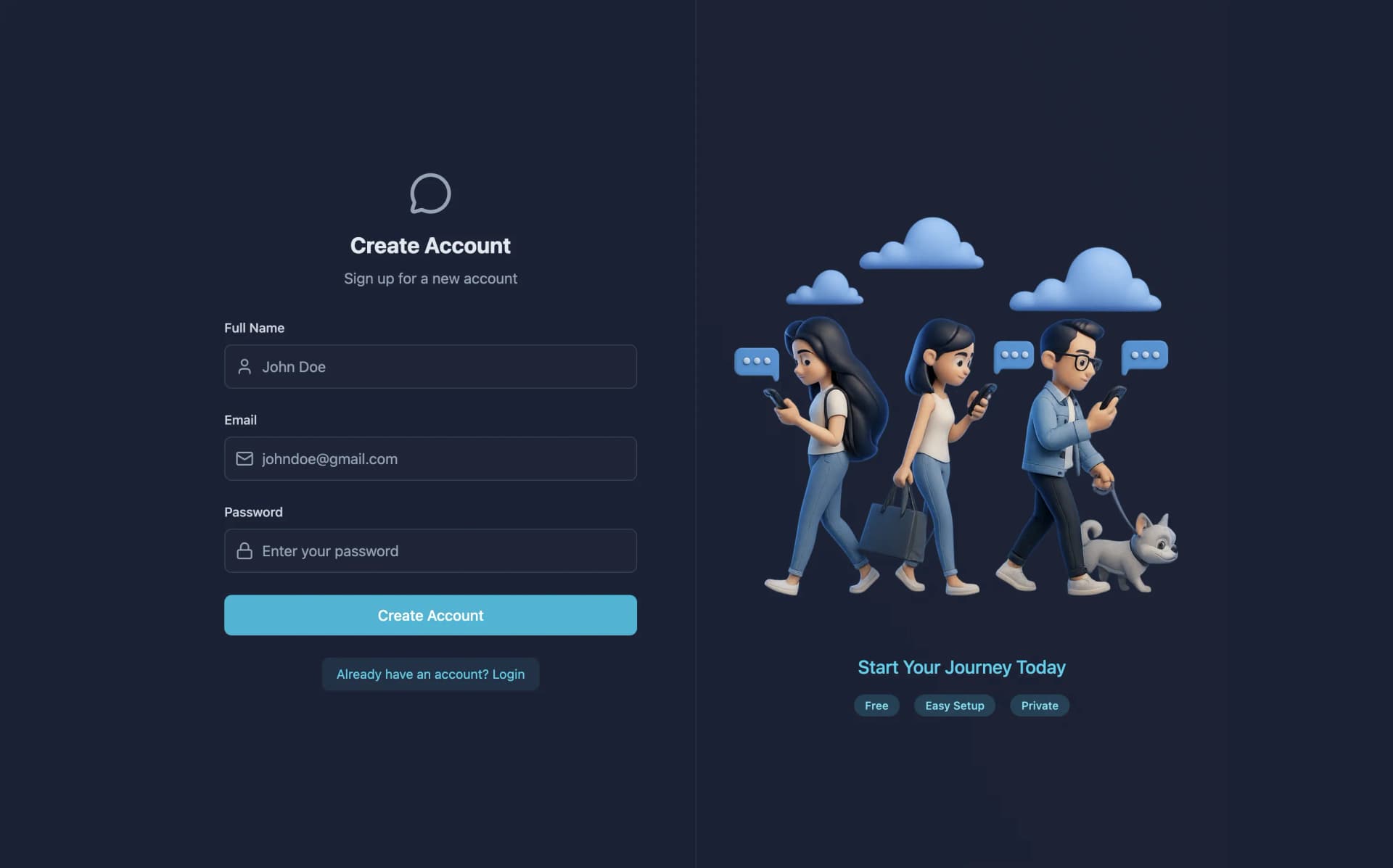
Multi-room event routing: instant presence badges, typing indicators, and optimistic message delivery.
Lessons Learned from Scaling Socket Servers
1. Authenticate on Handshake
Validating JWTs once during the initial TCP upgrade handshake saves thousands of database verifications per second compared to validating on every custom event.
2. Rate-Limiting Socket Payloads
Adding token-bucket rate limiters per socket prevents rogue clients or bot scripts from spamming delta events and overloading the Redis pub/sub backbone.